 +31 (0) 33-253-6804
  Blog
Blog
The Advantages of Modular Floor Systems for Technical Environments
Server rooms, technical rooms, and laboratories place different demands on a floor than a standard office. These are the concrete benefits a modular floor system delivers in those settings.

What sets a modular floor system apart
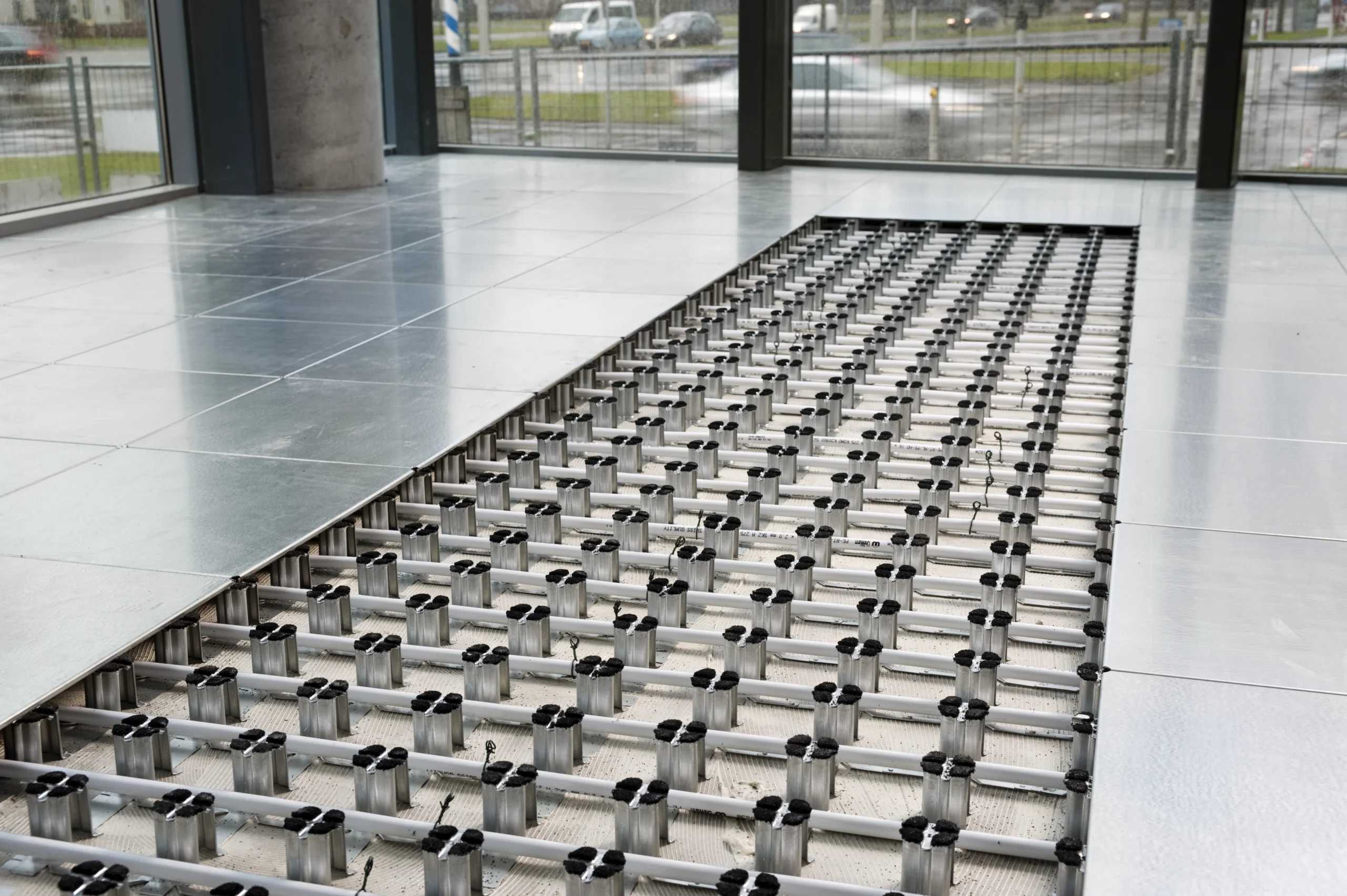
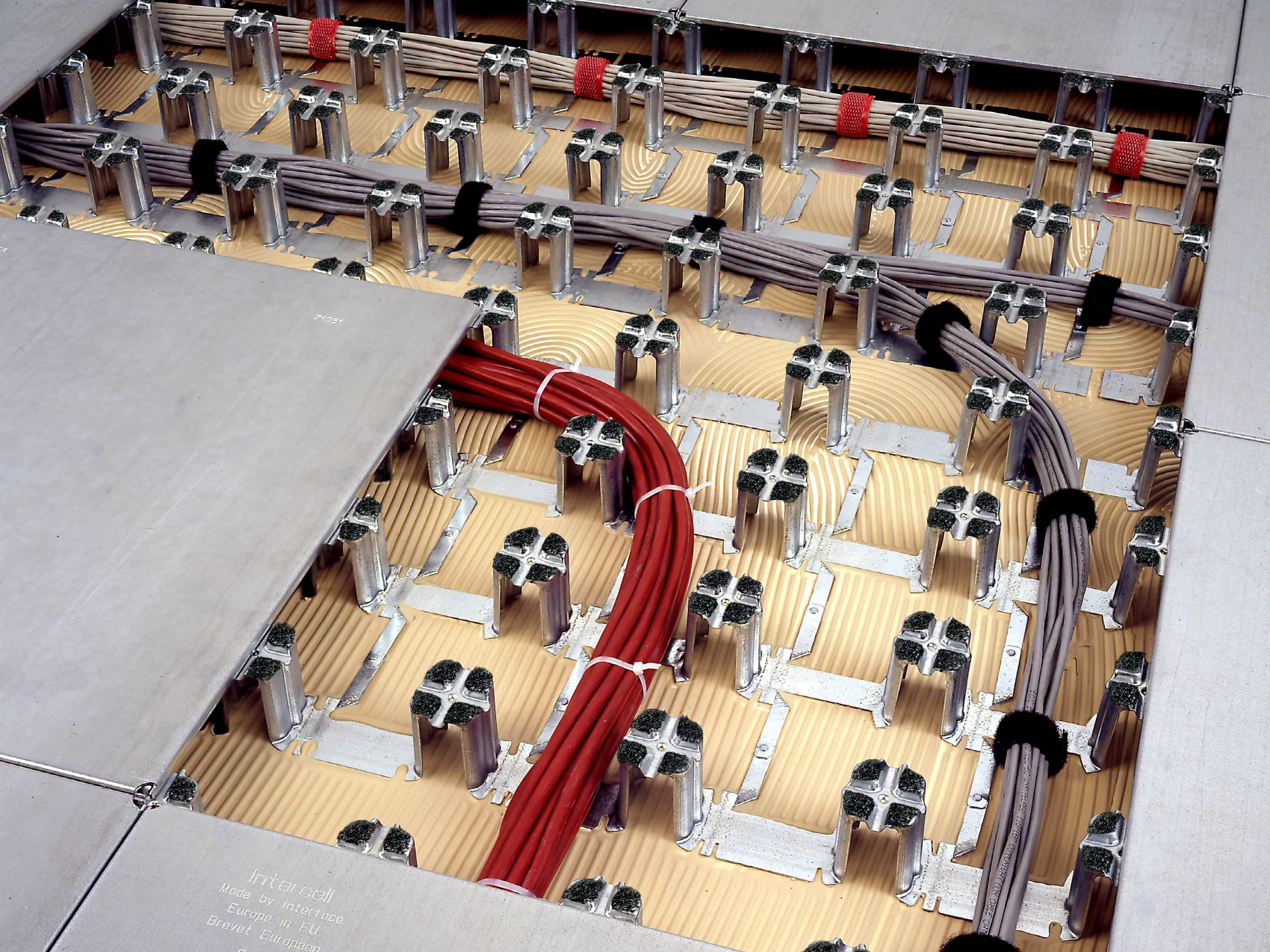
A modular floor system such as Intercell consists of individual, repeatable components: floor supports, floor boxes for cable management, and individual 500 x 500 mm steel floor panels on top. It is precisely this unit-based construction that makes the system suitable for technical environments where equipment, cabling, and room layouts change more frequently than in a conventional office.
Why individual components are better suited to technical rooms
A modular floor system consists of recurring units: floor supports, floor boxes, and loose steel panels. In a technical room, the layout changes more frequently than in an office – equipment is added, repositioned, or replaced. Since each component rests independently, such changes can be implemented without having to relay the entire floor.
1. Targeted access without breaking up the floor
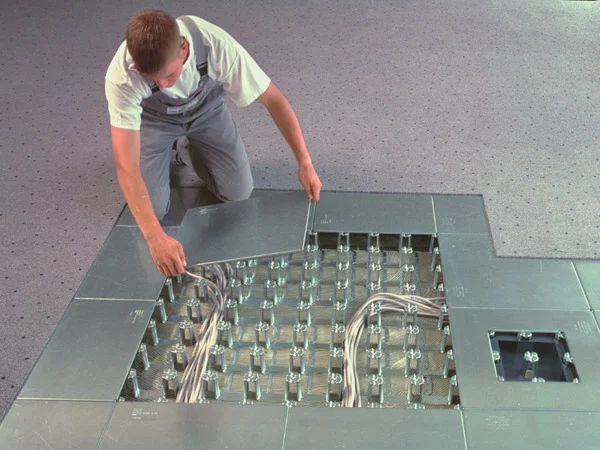
Each floor panel can be removed individually and without tools. In a server or equipment room, this allows a technician to access the exact floor panel required without affecting adjacent equipment or cable routing.
2. Designed for heavy, concentrated loads
Racks, cabinets, and measuring instruments are often heavy and unevenly distributed across the floor. Intercell has been tested in accordance with EN12825 and achieves Class 4B, with a maximum working load of 10 kN (1,000 kg) at a point load of 25 x 25 mm. The system also passes both soft-body and hard-body impact tests without failure.
3. Fire protection in accordance with European standards
For equipment rooms with extensive installations and cabling, fire protection is a fundamental requirement. Intercell has been tested for fire safety in accordance with EN13501-1 and EN13501-2, achieving Class Afl-s1. In a localised fire test under a load of 800 kg/m², maximum deflection was limited to 0.98 mm.
4. Electromagnetic interference shielding
In rooms housing a large number of electronic devices, protection against electromagnetic interference is essential. The system has been tested accordingly and attenuates electromagnetic radiation by approximately 20 to 25 dB depending on frequency.
5. Lightweight construction with undiminished load-bearing capacity
Despite its high load-bearing capacity, Intercell adds a maximum of 22 kg/m² to the existing structure. This is attributable to the 64 floor supports per m² and the galvanised steel used, which also facilitates transport and installation.
Compatibility with Existing Installations
The system is compatible with most European connector types via the Intercell floor box. This means that existing cabling and connection points can in many cases be integrated without additional modifications, which is significant when renovating an existing technical room.
Why individual components are better suited to technical rooms
A modular floor system consists of repeatable units: floor supports, floor boxes, and loose steel panels. In a technical room, the layout changes more frequently than in an office — equipment is retrofitted, repositioned, or replaced. Since each component is installed individually, such changes can be implemented without having to relay the entire floor.
Compatibility with existing installations
The system is compatible with most European plug types via the Intercell floor box. This means that existing cabling and connection points can in many cases be connected without additional modifications — which is particularly relevant when refurbishing an existing technical room.
Frequently Asked Questions
What distinguishes a modular floor system from a conventional system?
It consists of individual, repeating components – floor supports, floor boxes, and steel panels – which can be removed separately, rather than forming a fixed, interconnected structure.
How is heavy equipment such as racks and cabinets supported?
The system achieves Class 4B in accordance with EN12825, with a maximum operational load of 10 kN at a point load of 25 x 25 mm.
Is the system compliant with fire protection regulations?
Yes, it has been tested for fire resistance in accordance with EN13501-1 and EN13501-2, achieving Class Afl-s1.
Does the system affect sensitive electronic equipment?
It has been tested for electromagnetic compatibility (EMC) and attenuates electromagnetic radiation by approximately 20 to 25 dB, depending on frequency.
How much weight does the system add to the existing structure?
A maximum of 22 kg/m², thanks to 64 floor supports per m² and the use of galvanised steel.
Interested in Intercell?
Contact us for a personal consultation on the possibilities of Intercell in your building.